

Why Drinking Filtered Water Matters for Your Health
Drinking filtered water is one of the simplest ways to protect your family from harmful contaminants while improving taste, reducing costs, and cutting plastic waste. Here's what you need to know:
Quick Answer: Should You Filter Your Water?
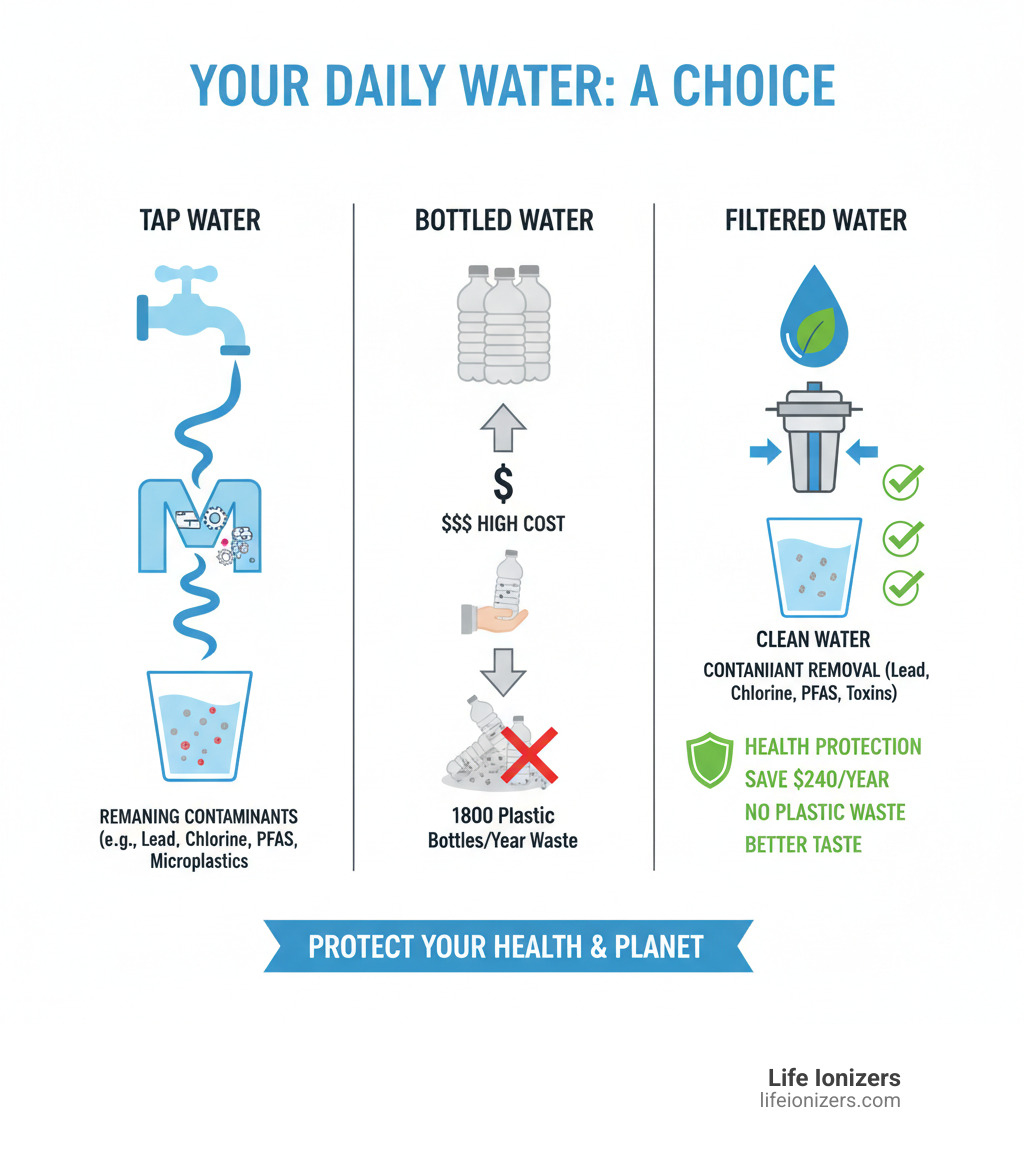
- Health Protection: Removes lead, chlorine, PFAS, pesticides, and more.
- Better Taste: Eliminates chlorine aftertaste and odors.
- Cost Savings: Up to $240/year compared to bottled water.
- Environmental Impact: Prevents up to 1,800 plastic bottles per year from landfills.
- Peace of Mind: Certified filters provide consistent, safe water at home.
Every day, you turn on your tap trusting the water is safe. But is it really?
While municipal water treatment is essential, tap water can contain over 90 different contaminants, from lead leaching from old pipes to PFAS "forever chemicals." An estimated 15-22 million Americans still drink from lead-contaminated taps due to aging infrastructure.
The solution isn't bottled water, which creates massive environmental waste and costs up to 30 times more than filtered water. The answer is home water filtration. A quality system removes harmful substances while keeping beneficial minerals, improving taste, and saving you money.
I'm Thai Cabados, and for over 20 years I've worked in the water filtration industry. My certification from the Water Quality Association and pioneering work in alkaline hydrogen water systems has given me deep expertise in drinking filtered water solutions. Let me guide you through what you need to know to make the best choice for your home.
What's Really in Your Tap Water?
When you fill a glass from your kitchen tap, you probably don't think twice. It looks clean, and our treatment plants are keeping us safe, right? Mostly, yes. But the full story is more complex, and understanding it is the first step toward making drinking filtered water a daily habit.
Municipal facilities do crucial work, filtering sediment and disinfecting with chlorine to kill dangerous pathogens. However, the disinfection process itself can create problems. Chlorine reacts with organic matter to form disinfection byproducts (DBPs), which are potentially carcinogenic. The U.S. Council of Environmental Quality found that cancer risk was 93% higher among those exposed to chlorinated drinking water.
Then there's the journey water takes to your home. The U.S. banned lead pipes in 1986, but millions of old lead service lines remain. It's estimated that 15-22 million Americans still drink lead-contaminated tap water. The EPA has documented extensive research on lead in drinking water, and the findings are sobering. Even if your city's pipes are safe, older plumbing in your own home could be leaching lead into your water.
Common Contaminants and Their Health Risks
So what's lurking in your tap water? Here are the usual suspects.
Lead is a notorious heavy metal that damages the brain and body, especially in children, where it's linked to developmental delays and learning disabilities. For more on this threat, read our article on Are You at Risk with Lead Contaminated Drinking Water?.
Chlorine and disinfection byproducts (DBPs) are an ironic problem. The chemical that protects us at the plant becomes a health concern in our homes, creating suspected carcinogens that accumulate in our bodies.
PFAS "forever chemicals" are a family of over 15,000 man-made chemicals that persist indefinitely in the environment and our bodies. Linked to cancer, liver damage, and immune system problems, PFAS are now present in 45% of U.S. tap water. Learn more in our guide: What Are Forever Chemicals and Should I Be Worried?.
Pathogens can still slip through. The CDC estimates 7.15 million illnesses in the U.S. each year from waterborne pathogens like norovirus and giardia. A simple home filter can provide a vital extra layer of protection.
Pesticides, pharmaceuticals, and heavy metals like arsenic, cadmium, and mercury can also be found in tap water, creating a chemical cocktail you didn't order.
How to Check Your Local Water Quality
Before choosing a filter, you need to know what you're filtering out.
- Consumer Confidence Report (CCR): Your water utility is required to provide this annual report detailing contaminants found in your water. You can usually find it on their website.
- Private Well Testing: If you're not on municipal water, the responsibility for testing is yours. We recommend regular testing by an accredited lab.
- EPA Guidelines: The EPA's website is an excellent resource for understanding water quality standards and specific contaminants.
For a step-by-step guide, check out our article: How to Find Out What's in Your Water.
The Clear Benefits of Drinking Filtered Water
After learning what might be in your tap water, you're ready for some good news. Drinking filtered water isn't just about avoiding contaminants—it's about embracing a healthier, more delicious, and economical way of living.

Why is drinking filtered water a healthier choice?
Think of filtered water as giving your body a fresh start. The most obvious benefit is dramatically reduced exposure to toxins like lead, chlorine, and PFAS, protecting you from their long-term health effects. A good filter also acts as a final barrier against waterborne pathogens like giardia that may slip through municipal treatment.
Clean water also supports your body's natural detoxification. Your kidneys and liver need pure water to flush out toxins effectively. When you're not adding to their toxic burden, they can do their job better. Proper hydration with clean water also leads to improved skin health and helps your cells absorb nutrients more efficiently. For those interested in taking this further, alkaline hydrogen water offers additional wellness advantages. You can explore more in our article on Benefits of Alkaline Water for the Human Body.
Beyond Health: The Taste and Financial Perks
Let's be honest: filtered water just tastes better. Eliminating that chlorine aftertaste makes it easier to stay hydrated. This improvement extends to your kitchen, resulting in better tasting coffee, tea, and food. When you cook with pure water, the true flavors of your ingredients can shine through.
Now, let's talk about your wallet. Switching to filtered water can save you around $240 per year compared to buying bottled water, which can cost up to 30 times more. That's money back in your pocket. As a bonus, some filtration systems reduce scale buildup, extending the life of your coffee maker and kettle.
When water tastes great, it's easier to make it a healthy habit. Drinking water before meals can even help reduce calorie intake. For more on this, see our article on 5 Ways Alkaline Water Helps You Lose Weight.
The bottom line? Drinking filtered water is about embracing positive changes that make life healthier, tastier, and more affordable.
A Guide to Home Water Filtration Methods
Choosing a home water filtration system can feel overwhelming, but it's simple once you understand the basics. Different filters target different contaminants, which is why knowing your local water quality is so important. No single filter removes everything.
Systems are either point-of-use (POU), treating water at one spot like a sink, or point-of-entry (POE), treating all water entering your home. It's also critical to follow the manufacturer's guidelines for filter replacement. Old filters are ineffective and can become breeding grounds for bacteria.
For a detailed side-by-side comparison, check our guide: Filtration Comparison.
Common Filter Types for Your Home
Let's walk through the most common options for drinking filtered water at home.
Water filter pitchers are a great starting point. They're affordable, require no installation, and are perfect for renters. They primarily improve taste by removing chlorine and can reduce some heavy metals. However, they have a small capacity and limited contaminant removal. Life Ionizers offers advanced pitchers that also deliver hydrogen-rich alkaline water.
Faucet-mounted filters attach directly to your kitchen faucet for on-demand filtered water. They are affordable and easy to install but can be bulky and don't fit all faucet types. Their filtration capability is better than a basic pitcher but less comprehensive than under-sink systems.
Under-sink systems are a significant step up. Installed under the sink, they use multi-stage filtration to tackle a wide range of contaminants, including nearly all PFAS. They offer high capacity without cluttering your counter, making them a great discreet option. They are more expensive and require some installation. Life Ionizers provides under-sink systems with advanced technology for superior performance.
Whole-house systems (POE) are the most comprehensive solution. Installed at your main water line, they treat every drop of water in your home for drinking, cooking, and bathing. This is the most expensive option and requires professional installation, but it offers complete peace of mind.
Advanced Purification: Water Ionization and UV
For those focused on optimal health, some technologies offer benefits beyond standard filtration.
UV light disinfection uses ultraviolet light to kill bacteria, viruses, and other microorganisms without chemicals. It's highly effective at eliminating pathogens but doesn't remove chemical contaminants, so it's often paired with other filters. Learn more here: UV Light Disinfection.
Water ionization is where Life Ionizers excels. Our technology uses electrolysis to create "Live Hydrogen Water™," an alkaline, antioxidant-rich water. This water offers superior hydration and can help neutralize harmful free radicals. Unlike reverse osmosis (RO), which strips away beneficial minerals like calcium and magnesium, our ionizers retain these vital minerals. While the initial investment is higher, it's an upgrade from conventional filtration, providing benefits that extend far beyond simple contaminant removal. Learn about the downsides of RO here: Why Reverse Osmosis Water Is Bad For You: How To Fix It.
Filtered vs. Bottled Water: The Real Cost
When considering drinking filtered water, many people think of bottled water as a healthy alternative. But when you look at the health, cost, and environmental impacts, filtered tap water is the clear winner.
The Environmental Toll of Bottled Water
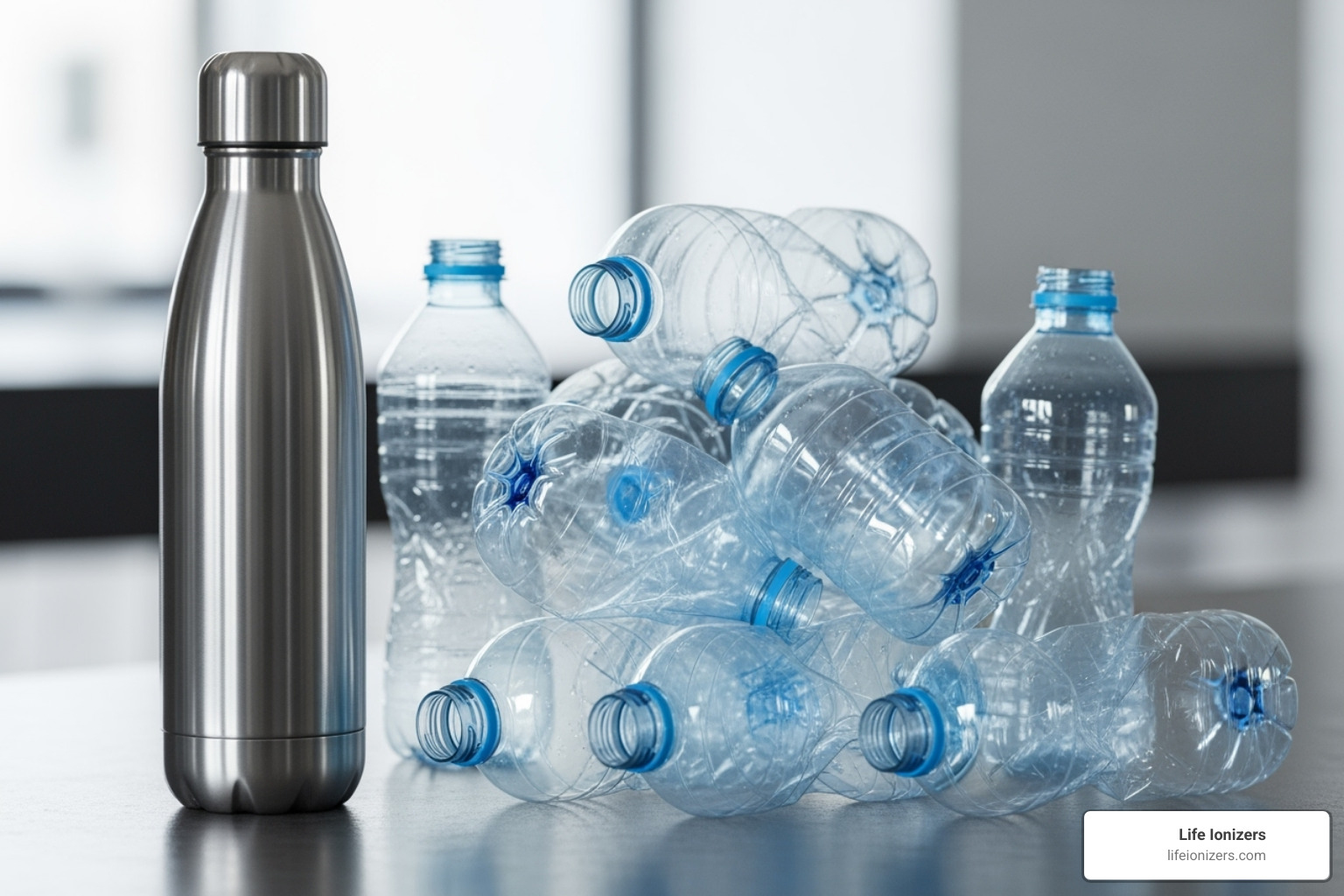
The plastic waste from bottled water is staggering. People in the U.S. use 2,000 disposable water bottles every second. Globally, that's 1.2 million bottles per minute.
Most of this plastic isn't recycled. It ends up in landfills, where a single bottle takes 450 years to decompose, or in our oceans, where it breaks down into microplastics that contaminate our environment and food chain. The production process is also a problem, requiring 17 million barrels of oil annually just to manufacture the bottles. The carbon footprint is enormous and unnecessary. For more, see this fact sheet on single-use plastics.
Is Bottled Water Safer or Healthier?
Despite pristine marketing, bottled water often isn't safer than filtered tap water. The Environmental Working Group found 38 contaminants in 10 popular brands. Bottled water companies aren't required to disclose their water quality tests with the same transparency as municipal suppliers.
In fact, a significant portion of bottled water is just processed tap water, sold at a premium of up to 30 times the cost of filtered tap water. The plastic bottles themselves can leach chemicals like bisphenol-A (BPA), especially when exposed to heat. Ironically, the EPA's regulations for tap water are often stricter than the FDA's rules for bottled water.
Switching from bottled water to drinking filtered water can save you around $240 every year. Bottled water is an expensive, environmentally damaging choice that doesn't deliver on its promise of purity. For a full comparison, read our articles: Is Bottled Water Safer Than Tap Water and Why Bottled Water Is Bad For You.
How to Choose the Right Water Filter
Choosing the right water filter means matching a solution to your specific needs, lifestyle, and budget. There's no one-size-fits-all answer.
Start with your water quality report to know which contaminants you need to target. Then, consider your budget, household size, and whether you prefer a simple setup or a professionally installed system. For those considering the advanced benefits of ionized water, our How to Buy Ionizer guide walks you through the specific considerations for choosing a system that will transform your drinking filtered water experience.
Understanding Filter Certifications (NSF/ANSI)
Certifications from independent organizations like NSF International separate marketing hype from proven performance. They are third-party proof that a filter does what it claims. Look for these key certifications:
- NSF/ANSI 42: For "aesthetic effects." This means the filter reduces chlorine, improving taste and smell.
- NSF/ANSI 53: For "health effects." This verifies the reduction of specific health-related contaminants like lead and cryptosporidium cysts.
- NSF/ANSI 401: For "emerging contaminants," including certain pharmaceuticals and pesticides.
These certifications provide transparency. You can look up products in the NSF database to verify their claims. For more details, the NSF knowledge library is an excellent resource.
What to consider before drinking filtered water from a new system
Once your filter is installed, a few steps are crucial for safety and effectiveness.
Filter replacement frequency is non-negotiable. Old filters don't just stop working; they can become breeding grounds for bacteria. A study found that water from overdue filters can have bacterial counts thousands of times higher than tap water. Follow the manufacturer's schedule religiously.
When you install a new filter, always flush it according to the instructions. This removes any loose carbon dust or manufacturing residues.
Also, consider mineral removal. Some methods, like reverse osmosis, strip away beneficial minerals like calcium and magnesium, leaving water acidic. This is a key reason we champion water ionizers at Life Ionizers—our systems remove contaminants while retaining the healthy minerals your body needs.
Finally, always use genuine replacement filters to ensure quality and performance. We offer Genuine Life Ionizer Replacement Filters designed for our systems.
Take Control of Your Water Quality
You now understand the invisible threats that can be in your tap water and why bottled water isn't the answer. You've learned that drinking filtered water is the smartest choice for your health, your wallet, and the planet.
This is about taking an active role in your family's well-being. When you choose filtered water, you're choosing:
- Health Protection: Reducing exposure to harmful toxins.
- Better Taste: Enjoying pure, delicious water.
- Financial Freedom: Saving hundreds of dollars a year.
- Environmental Responsibility: Cutting plastic waste.
Home water filtration puts you in control. No more wondering what's in your water, contributing to the plastic crisis, or overpaying for a lesser product. Just clean, pure hydration on demand.
At Life Ionizers, we believe your family deserves the best. Our advanced water ionizers don't just filter out contaminants—they create "Live Hydrogen Water™" with powerful antioxidant properties. Our unique technology produces superior hydrogen-rich, alkaline water that retains the beneficial minerals your body needs.
Every glass of water is an opportunity to nourish your body. The decision to start drinking filtered water is one of the simplest, most impactful choices you can make for your health.
Ready to transform your hydration? Discover the best hydrogen water machine for your home. Your body is counting on you. Give it the pure, healthy water it deserves.
