

Understanding the Alkaline vs. Ionized Water Confusion
The difference between alkaline water and ionized water is one of the most misunderstood topics in the healthy water space. While these terms are often used interchangeably, they actually describe two distinct types of water with different production methods and properties.
Quick Answer:
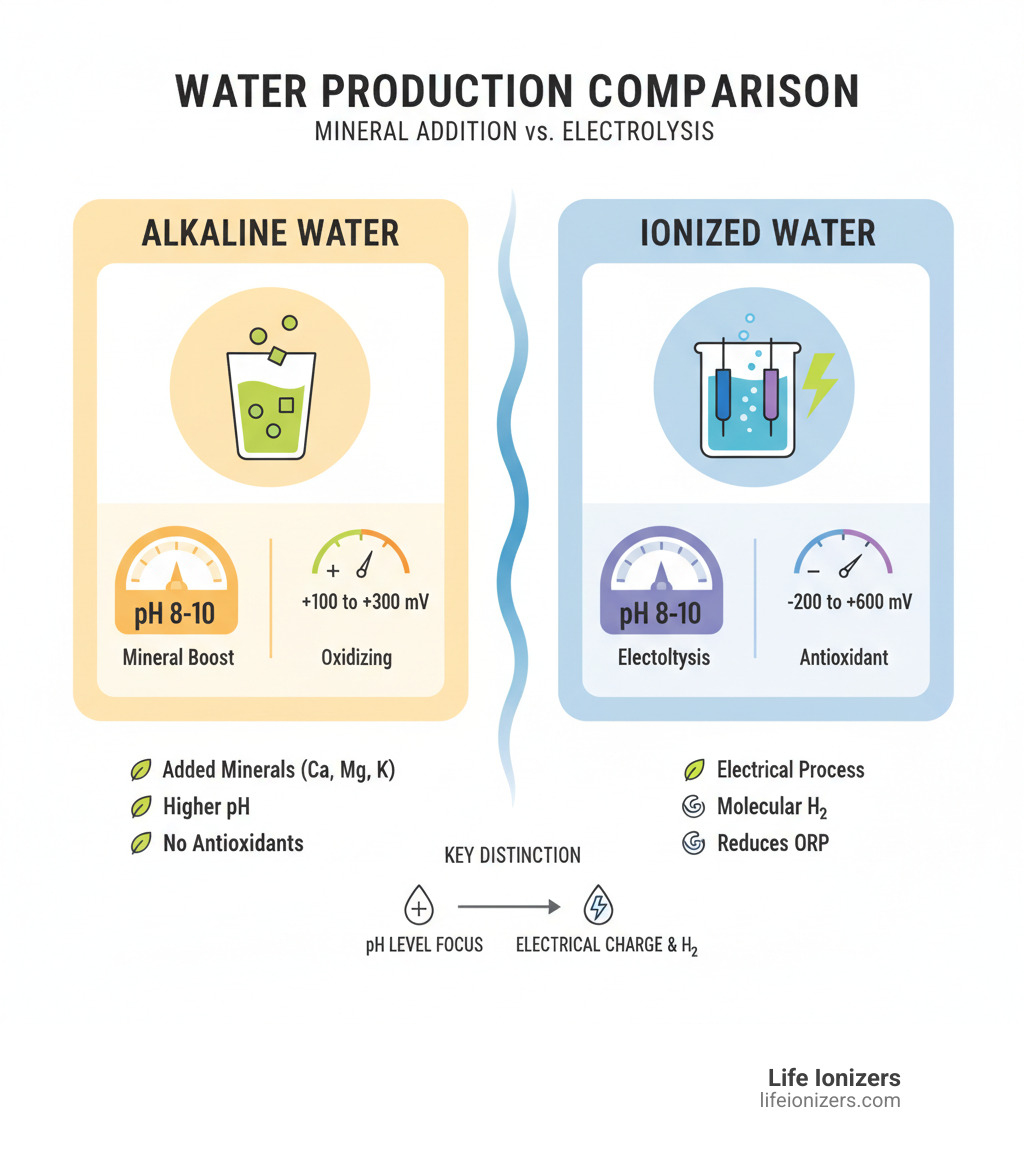
- Alkaline Water: Has a pH above 7, typically achieved by adding minerals like calcium, magnesium, or potassium
- Ionized Water: Created through electrolysis, giving it a negative electrical charge and antioxidant potential
- Key Distinction: Alkaline water focuses on pH level, while ionized water emphasizes electrical charge and molecular hydrogen content
Many people assume that all alkaline water is ionized, but that's not true. You can have alkaline water without ionization (like bottled alkaline water with added minerals), and you can have ionized water at neutral pH levels.
The confusion often stems from the fact that most water ionizers produce alkaline ionized water - water that's both alkaline and ionized. But understanding the difference matters because ionized water offers unique properties that simple alkaline water doesn't have.
According to research, ionized water has a higher potential for antioxidants compared to regular alkaline water due to its negative oxidation-reduction potential (ORP) and dissolved molecular hydrogen content.
The Core Difference Between Alkaline Water and Ionized Water
Now that we've covered the basics, let's dive deeper into what really sets these two water types apart. The difference between alkaline water and ionized water goes far beyond just fancy marketing terms - it's rooted in completely different production methods that create water with unique properties.
Think of it this way: alkaline water is like adding baking soda to regular water to raise its pH, while ionized water is like giving water an electrical makeover that changes its fundamental structure. Both might end up alkaline, but they get there through very different journeys.
How is Alkaline Water Made and What Defines It?
Alkaline water is refreshingly straightforward - it's simply water with a pH above 7. While your regular tap water sits at a neutral pH of 7, alkaline water typically ranges between pH 8 and 9. But how does water become alkaline in the first place?
Nature has been making alkaline water for millions of years. When water flows over rocks and through mineral-rich soil, it naturally picks up calcium, magnesium, and potassium. These alkaline minerals gradually raise the water's pH, creating naturally alkaline spring water. It's like nature's own mineral supplement program!
Most alkaline water you'll find in stores, however, takes a more direct approach. Manufacturers add alkaline minerals or compounds directly to regular water. This process is similar to taking a vitamin - you're adding beneficial minerals that weren't there before to achieve that higher pH level.
The key thing to remember about alkaline water is that its main claim to fame is that liftd pH level. The idea is that this higher pH might help balance the acidity in our bodies, though the science on this is still evolving. Understanding why water pH matters can help you make more informed decisions about your hydration choices.
How is Ionized Water Produced and What Are Its Properties?
Here's where things get really interesting. Ionized water isn't just about pH - it's about fundamentally changing water through a process called electrolysis. This happens inside a device called a water ionizer, and it's honestly pretty amazing to watch.
The process starts with your regular tap water getting filtered to remove chlorine and other unwanted stuff. Then comes the magic: the clean water enters an electrolysis chamber with special platinum-coated titanium plates. When electricity flows through these plates, something remarkable happens.
The electrical current literally splits the water molecules, separating them based on their electrical charge. The minerals in the water - like calcium and magnesium - gather extra electrons and become negatively charged. This creates two separate streams of water: one alkaline and antioxidant-rich, and one acidic.
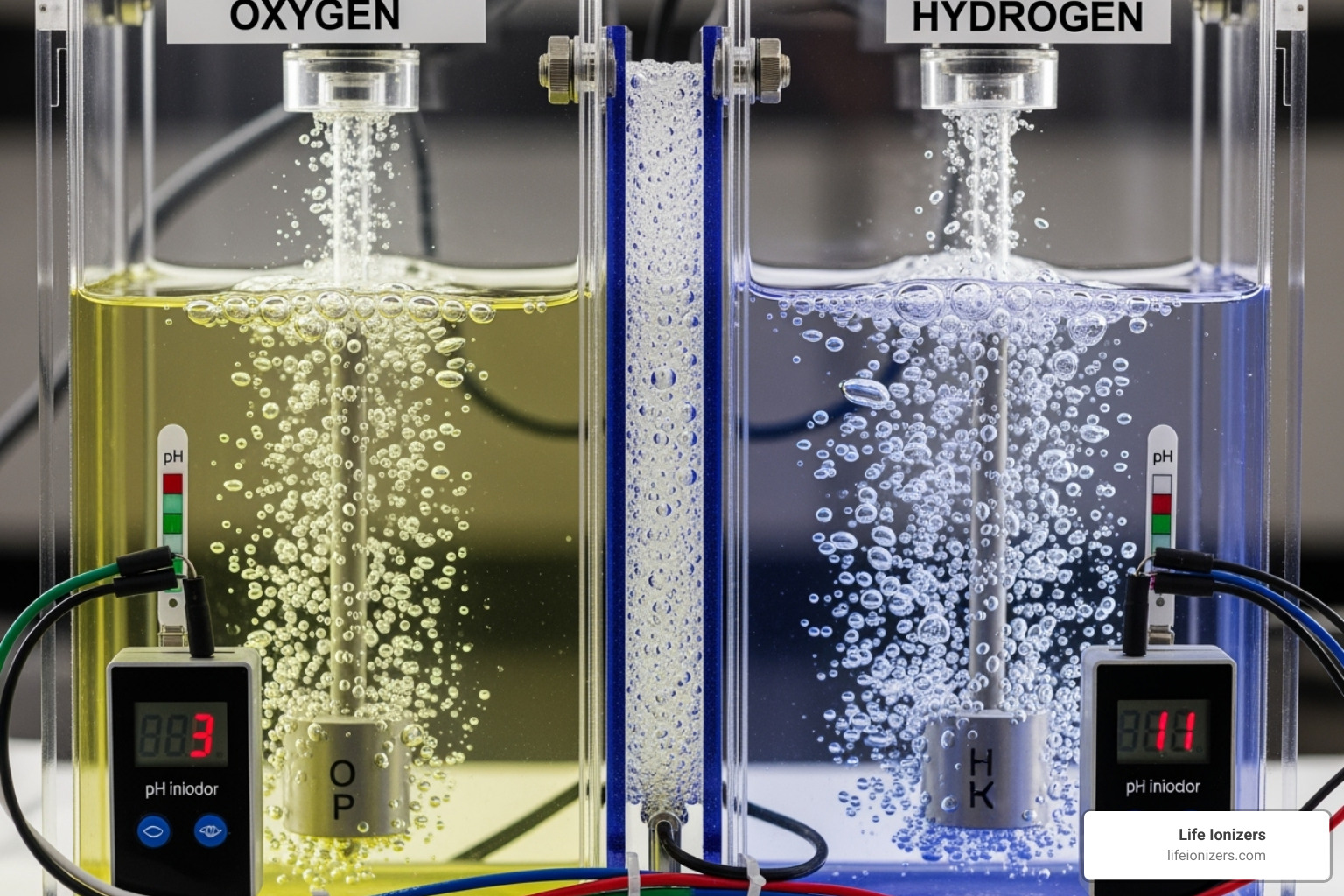
What makes ionized water special isn't just its alkaline pH - it's those negative charges and the molecular hydrogen created during electrolysis. This gives ionized water what scientists call a negative ORP (Oxidation Reduction Potential), which means it has antioxidant properties that simple alkaline water just doesn't have.
The process is so unique that learning how water ionizers work really helps you appreciate why ionized water is considered different from other alkaline waters.
pH vs. Alkalinity: A Common Point of Confusion
Here's where many people get tripped up, and honestly, it's totally understandable. pH and alkalinity sound like they should be the same thing, but they're actually quite different.
pH measures how acidic or alkaline something is right now. It's like taking a snapshot of your water's current state. The pH scale runs from 0 to 14, with 7 being neutral. Scientists use this scale because it gives us a precise way to measure hydrogen ion concentration.
Alkalinity, on the other hand, measures your water's ability to fight off acids - think of it as your water's defensive strength. It's the buffering capacity that determines how well your water can neutralize acids when they're added to it.
This distinction matters because you can have water with a high pH that crumbles the moment it encounters acid, or water with moderate pH that's incredibly good at neutralizing acids. It's like the difference between being tall (pH) and being strong (alkalinity) - they're related but definitely not the same thing.
Ionized water typically excels at both - it has a higher pH and better alkalinity thanks to those concentrated alkaline minerals from the ionization process. This is why understanding whether ionized water is alkaline or acidic can help clear up a lot of confusion about these different water types.
The bottom line? When you understand these differences, you can make better choices about which type of water might work best for your health goals.
Health Claims and Scientific Evidence
When exploring the difference between alkaline water and ionized water, we inevitably encounter a world of health claims and promises. Both types of water have passionate advocates, but what does the actual science tell us? Let's explore the research with an open mind and a healthy dose of curiosity.

The Science Behind Ionized Water: ORP and Molecular Hydrogen
Here's where things get really interesting, and where ionized water starts to show its unique personality. While regular alkaline water might have a higher pH, ionized water brings something completely different to the table thanks to the electrolysis process.
Oxidation Reduction Potential (ORP) is like a water's electrical fingerprint. Think of it as measuring whether your water is more likely to give electrons (antioxidant) or take them away (oxidizing). Most tap water and bottled water actually have a positive ORP, meaning they're slightly oxidizing to your body.
Ionized water flips this script entirely. When water goes through electrolysis, it typically develops a negative ORP, which means it's loaded with free electrons ready to donate to unstable free radicals in your body. The numbers are pretty remarkable - while green tea (famous for its antioxidants) has an ORP of about -120mV, quality water ionizers can produce water with an ORP reaching -860mV. That's more than three times the antioxidant potential of your favorite green tea!
But here's the real star of the show: molecular hydrogen (H2). This tiny molecule is one of the smallest in existence, which means it can zip through your body and even slip right through cell membranes. Research on molecular hydrogen's effects has exploded in recent years, with over 3,000 studies exploring how it might help combat oxidative stress.
The electrolysis process doesn't just change the pH - it fundamentally transforms the water's chemical and electrical properties. One fascinating study found that the antioxidant strength of Vitamin C was actually tripled when mixed with alkaline ionized water. That's the kind of synergy that makes scientists sit up and take notice.
The truth about ionized water reveals these unique properties that you simply can't get from adding minerals to regular water.
Purported Benefits and the Research
Now, let's talk about what the research actually shows. While we'd all love definitive answers about every health claim, science is a gradual process. The good news? Some genuinely promising studies have emerged.
Acid reflux sufferers might find this interesting: a 2012 medical study showed that alkaline water with a pH of 8.8 effectively neutralizes pepsin, the main enzyme behind acid reflux. The water also showed strong acid-buffering capacity, which could provide real therapeutic benefits for people dealing with reflux issues.
Bone health is another area where alkaline water shows promise. When our bodies become too acidic, they may pull minerals from our bones to restore balance. A 2021 study on bone density suggested that alkaline water might help improve bone density in postmenopausal people with osteoporosis.
The hydration question is fascinating. Ionized water proponents often talk about "micro-clustering" - the idea that electrolysis creates smaller groups of water molecules that absorb more easily into cells. A 2016 study in the Journal of the International Society of Sports Nutrition put this to the test with 100 participants. Those who drank electrolyzed high-pH water after exercise showed a 6.30% reduction in blood viscosity compared to just 3.36% with regular purified water. Better blood flow often means better hydration.
Anti-aging research is still in its early stages, but intriguing nonetheless. A 2020 study on aging markers in mice found that daily alkaline water intake improved DNA aging markers. While we can't directly translate mouse studies to humans, it's certainly thought-provoking.
Gastrointestinal health got some attention in a small 2018 Japanese study where 60 people drinking alkaline electrolyzed water showed slight improvements in stool quality. Some research has also suggested potential benefits for blood pressure and blood sugar levels.
The pattern we're seeing? Promising early results that make us optimistic, but we need larger, longer-term human studies to really understand the full picture.
Are There Any Risks or Side Effects?
Let's be honest about this - even good things can have downsides if not used thoughtfully. For most healthy people, drinking alkaline or ionized water in the pH 8-10 range is generally safe. Our bodies are pretty amazing at maintaining stable internal pH levels through our kidneys and lungs.
But there are some important considerations. Hyperkalemia (high blood potassium) becomes a concern if you're regularly drinking very high pH water (above 9.8), especially if you have kidney issues. Your kidneys work hard to process minerals and maintain pH balance, and if they're not functioning perfectly, alkaline water could overwhelm their capacity.
People with kidney conditions need to be particularly careful. Those who should be cautious include anyone with impaired kidney function, as their bodies may struggle to handle the mineral load and pH changes.
If you're taking time-release medications, very alkaline water might affect how your body absorbs them. It's always smart to chat with your doctor about significant changes to your hydration routine.
Here's something many people don't think about: source water quality matters tremendously. If you're using a water ionizer, make sure it includes robust filtration to remove contaminants before ionization. With bottled alkaline water, especially in plastic containers, you might be trading one problem for another - chemicals like BPA and antimony can actually be drawn out more readily by alkaline water.
The bottom line? Listen to your body, start gradually if you're making changes, and don't hesitate to consult with a healthcare professional if you have any underlying health conditions. Water should make you feel better, not worse!
From Your Tap: How to Get Alkaline and Ionized Water
Now that we've explored the difference between alkaline water and ionized water and their potential health implications, let's talk about bringing these waters into your daily routine. The good news? You have more options than ever to access quality water right from your own kitchen.
The Fundamental Difference Between Alkaline Water and Ionized Water in Production
Here's where the rubber meets the road - or should I say, where the water meets your glass! The way water is produced makes all the difference in what you're actually drinking.
Natural alkaline water starts its journey as regular water flowing over rocks and minerals. As it travels through underground springs, it picks up calcium, magnesium, and bicarbonates naturally. These minerals bump up the pH, creating genuinely alkaline water. It's nature's own chemistry lab at work! While this water can be wonderfully mineral-rich, it doesn't pack the antioxidant punch of ionized water.
Bottled alkaline water takes a different approach. Most brands simply add minerals or chemical buffers to regular water to boost the pH. It's convenient to grab a bottle at the store, but here's the catch - any antioxidant properties that might have existed are long gone by the time you drink it. Those beneficial properties fade within about 24 hours.
And let's be honest about the cost. At $2-$5 per bottle, you're looking at thousands of dollars a year for a family. Plus, there's the environmental impact of all that plastic, not to mention concerns about chemicals like BPA and antimony leaching into your water over time.
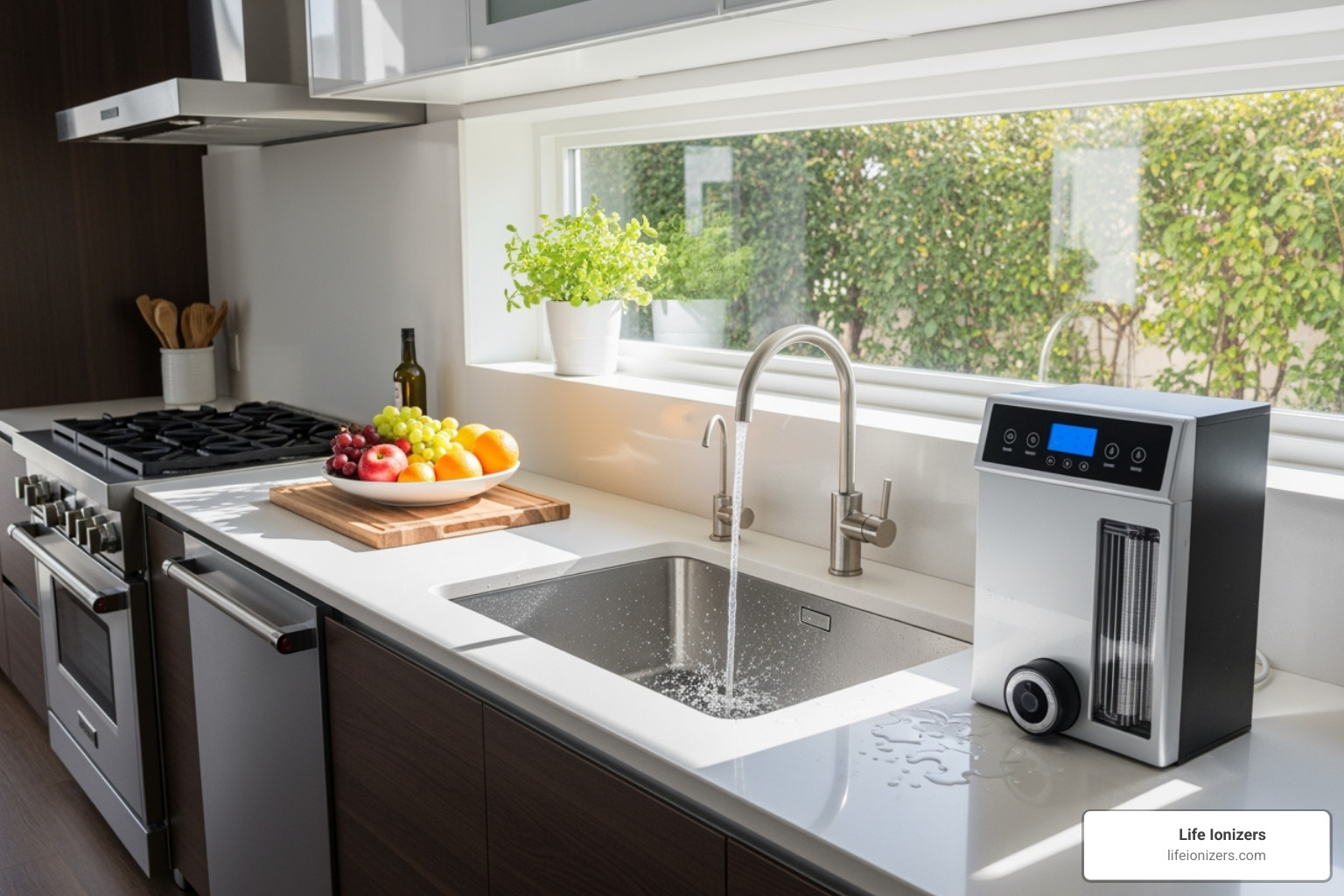
Ionized water from water ionizers is where things get exciting. These systems connect right to your tap, giving you fresh, on-demand alkaline ionized water whenever you want it. The electrolysis process doesn't just raise the pH - it creates that negative electrical charge we talked about and infuses the water with molecular hydrogen. You're getting what we call "Live Hydrogen Water™" that's bursting with antioxidant potential. Find what a water ionizer actually does to transform your tap water.
Water Ionizers and Hydrogen Water
The world of water technology has come a long way from simple filters. Today's advanced systems are like having a personal water laboratory in your kitchen.
Traditional alkaline water ionizers work by splitting your tap water into two streams - alkaline for drinking and acidic for other uses. While they do produce some molecular hydrogen, the amounts can be inconsistent, and they often create ozone gas as a byproduct.
Modern hydrogen water generators represent a leap forward in water technology. These sophisticated devices focus on maximizing dissolved molecular hydrogen because that's where the real therapeutic magic happens.
The secret weapon in many advanced systems is Proton Exchange Membrane (PEM) technology. Think of this special membrane as a bouncer at an exclusive club - it lets the good stuff (molecular hydrogen) through while keeping the troublemakers (like ozone gas) out. This means you get pure, therapeutic hydrogen water without any unwanted byproducts.
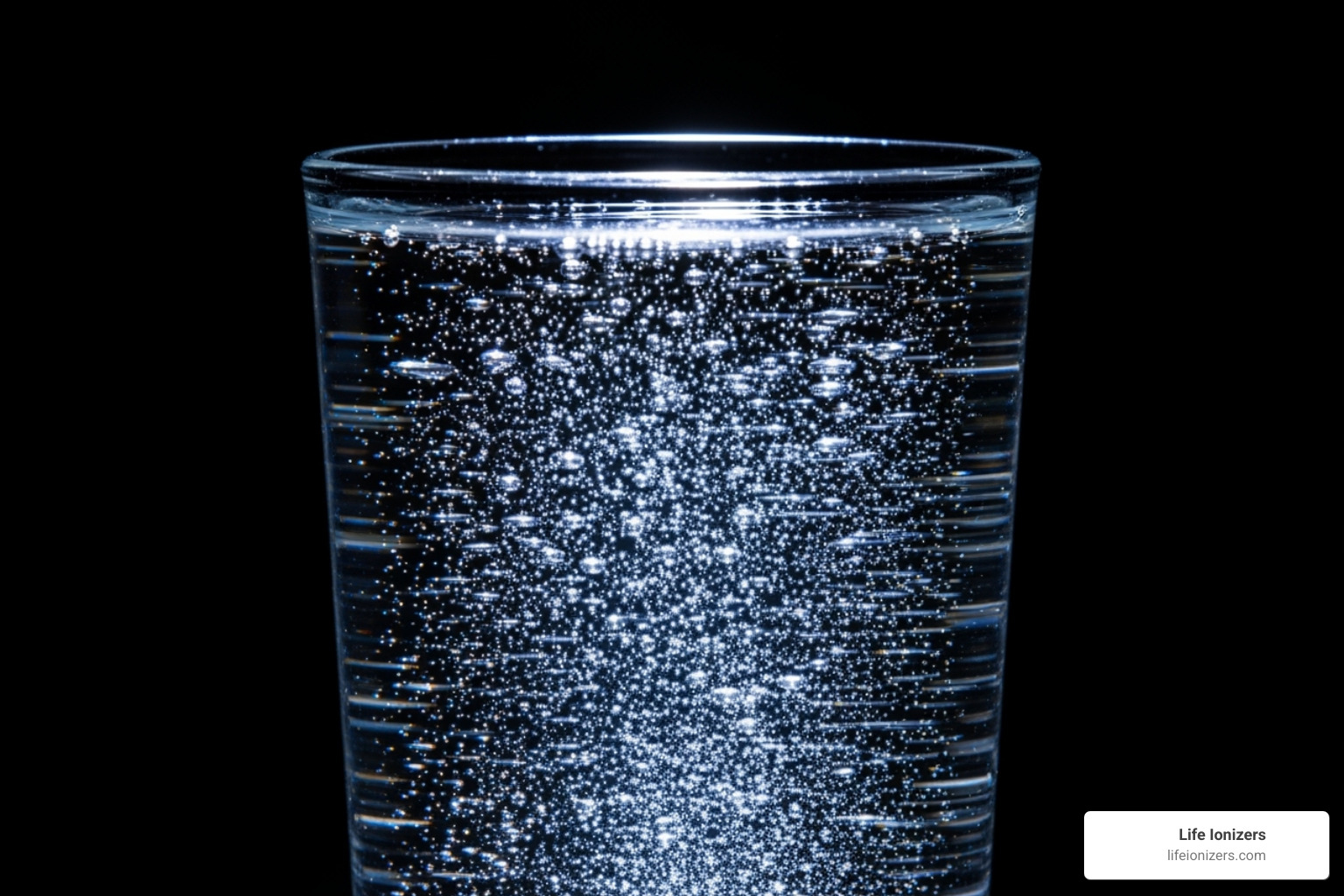
Here's something that might surprise you: these advanced systems can produce incredibly high levels of dissolved hydrogen (we're talking 1,600 parts per billion!) and powerful antioxidant potential (negative ORP of -750 mV) without dramatically changing the pH. So if you prefer your water closer to neutral pH around 7.3, you can still enjoy all those antioxidant benefits.
Our XL Matrix GRID Technology takes this concept even further, maximizing hydrogen production to deliver what we proudly call "Live Hydrogen Water™." It's packed with antioxidants and represents the cutting edge of water ionization technology.
The difference between alkaline water and ionized water really shines through when you compare a neutral pH hydrogen water generator to a regular alkaline water system. The hydrogen generator might show an impressive -500 mV ORP and 1,600 PPB of hydrogen, while the alkaline system might barely register -100 mV and almost zero hydrogen. Learn more about whether alkaline water or hydrogen water is the better choice for your health.
When you're choosing a water system for your home, understanding these distinctions helps you make an informed decision about what's really going into your body. After all, not all "healthy" water is created equal!
Frequently Asked Questions about Alkaline and Ionized Water
We get a lot of questions about water - and honestly, we love answering them! The world of healthy water can feel overwhelming at first, but once you understand the basics, it all starts to make sense. Let's tackle the most common questions we hear about the difference between alkaline water and ionized water.
What is the main difference between alkaline water and ionized water?
This is the big one - the question that gets to the heart of everything we've been discussing. The difference between alkaline water and ionized water really comes down to how they're made and what that process creates.
Alkaline water is straightforward - it's just water with a pH above 7. Most of the time, this happens by adding minerals like calcium, magnesium, or potassium to regular water. Think of it like adding a pinch of baking soda to your water - you're raising the pH, but that's pretty much it.
Ionized water is where things get interesting. It's created through electrolysis, which sounds fancy but is really just passing an electrical current through water. This process does something amazing - it gives the water a negative electrical charge (what we call ORP) and infuses it with molecular hydrogen. These are the properties that make ionized water special.
Here's the key point: while all ionized water from a water ionizer is alkaline, not all alkaline water is ionized. It's like how all squares are rectangles, but not all rectangles are squares. The ionization process adds those extra beneficial properties that simple mineral-added alkaline water just doesn't have.
Can you make ionized water at home?
Absolutely! And we're excited to tell you that it's actually pretty easy. The most reliable way to make ionized water at home is with a water ionizer. These clever devices hook up right to your kitchen tap, so you get fresh ionized water whenever you want it.
Here's how it works: the ionizer first filters your tap water to remove the stuff you don't want, then uses electrolysis to create that beautiful alkaline ionized water we've been talking about. Our Life Ionizers machines take this a step further with our XL Matrix GRID Technology, which produces what we call "Live Hydrogen Water™" - water that's packed with molecular hydrogen and has powerful antioxidant properties.
The best part? You're making fresh ionized water on demand. Unlike bottled water that sits on shelves for months, losing any beneficial properties it might have had, your home ionizer gives you water at its peak potential every single time.
Is drinking ionized water better than drinking regular alkaline water?
This is where the science gets really exciting. While both types of water are alkaline and can offer some benefits, ionized water brings something extra to the table that regular alkaline water simply can't match.
The magic is in the ionization process itself. When water goes through electrolysis, it gains that negative ORP (remember, that's the antioxidant potential we talked about) and gets infused with dissolved molecular hydrogen. These aren't just fancy terms - they represent real, measurable properties that could benefit your health.
Regular alkaline water, especially the bottled kind you find in stores, typically lacks these crucial antioxidant properties. Even if it somehow had them initially, they would disappear within about 24 hours. Plus, bottled alkaline water doesn't contain the dissolved molecular hydrogen that makes ionized water so unique.
We believe the combination of proper pH, negative ORP, and molecular hydrogen makes ionized water a superior choice for those serious about their hydration and health. It's not just about being alkaline - it's about getting all the potential benefits that only the ionization process can provide.
The Clear Choice for Your Health and Hydration
After diving deep into the difference between alkaline water and ionized water, you're probably feeling more confident about making the right choice for your health. The journey through pH levels, electrolysis, and molecular hydrogen might seem complex, but the takeaway is actually quite simple.
The ionization process changes everything. While regular alkaline water gives you a higher pH through added minerals, ionized water transforms the very nature of your hydration. When water goes through electrolysis in our advanced ionizers, it doesn't just become alkaline – it becomes electrically charged with antioxidant potential that your body can actually use.
Think of it this way: if alkaline water is like adding vitamins to your diet, ionized water is like upgrading your body's entire defense system. The negative ORP we've talked about isn't just a fancy measurement – it's your water's ability to neutralize harmful free radicals before they can damage your cells.
But here's where it gets really exciting: molecular hydrogen is the real game-changer. This tiny molecule is so small it can slip right through cell membranes and get to work where your body needs it most. Our "Live Hydrogen Water™" delivers this therapeutic gas fresh from your tap, something no bottled water can match.
pH is only part of the story. You could drink alkaline water with a pH of 9 all day long, but without the electrical charge and dissolved hydrogen that comes from proper ionization, you're missing out on the most powerful benefits. It's like having a sports car but only using it to drive to the mailbox.
The freshness factor matters more than you might think. Those antioxidant properties we're so excited about? They start fading the moment ionized water is exposed to air. That's why bottled alkaline water, sitting on shelves for months, simply can't deliver the same benefits as fresh ionized water from your kitchen.
At Life Ionizers, we've made it our mission to bring you water that goes beyond basic hydration. Our XL Matrix GRID Technology ensures every glass contains optimal levels of dissolved molecular hydrogen and maintains that crucial negative electrical charge. We're not just filtering your water – we're changing it into something that can truly support your health and vitality.
Making an informed decision about your water doesn't have to be overwhelming. When you understand that ionized water offers everything alkaline water does plus unique antioxidant properties and molecular hydrogen, the choice becomes clear. You deserve water that works as hard for your health as you do.
Learn more about the difference between alkaline water and ionized water and find how our innovative technology can transform your daily hydration into a powerful wellness routine.
